Individual counselling
Losing someone close to you can change almost every aspect of your life. Alongside the sadness of missing someone you love, you may experience loneliness, changes in your daily life or a future that suddenly feels very different. Together, we can explore these feelings, make space for your grief and find ways to navigate life after loss, at your own pace.
Grief is a natural response to loss, but it can affect us in many different ways. It doesn't follow a straight line or a fixed timeline. Feelings may come and go, sometimes unexpectedly, and what feels manageable one day may feel overwhelming the next. There is no right or wrong way to grieve.
As a trained grief and loss counsellor, I offer a safe and supportive space where you can share your experiences and explore the impact of loss on your life. An important part of my approach is helping you understand and normalise the emotions and reactions that often accompany grief, while recognising that everyone's experience is unique.
We also explore your personal story, your coping patterns and what might help you deal with difficult emotions and everyday challenges. Rather than trying to leave your loss behind, we focus on finding ways to integrate it into your life, making space for both grief and new experiences, while gradually rediscovering a sense of balance, connection and meaning.
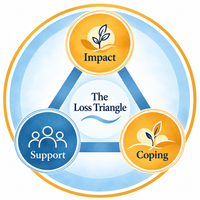
The Loss Triangle, based on the work of Herman de Mönnink, helps to understand how people experience and respond to loss. It looks at three important elements: the impact of the loss, the way someone copes, and the support they receive from others. Together, these elements can offer insight into what someone may need in order to feel more supported & resilient.
Family counselling
Children, teenagers and adults experience and express grief in different ways. Children and teenagers often need a different approach and type of support than adults. Younger children often need clear, honest and age-appropriate explanations, along with reassurance, stability and a sense of safety. Teenagers, on the other hand, may find it difficult to express their emotions, withdraw or temporarily put their grief aside. They often need space, understanding and support without feeling pressured to talk.
Within one grieving family, these different needs and ways of coping can create challenges. Family members may struggle to understand each other's feelings and reactions, even though they are experiencing the same loss.
I support families in navigating grief together, helping each family member feel heard, understood and supported in their own way. By recognising and exploring the different ways of grieving, we work towards stronger connections and a renewed sense of balance within the family.
Together, we create space for grief while finding ways to integrate the loss into everyday family life.